
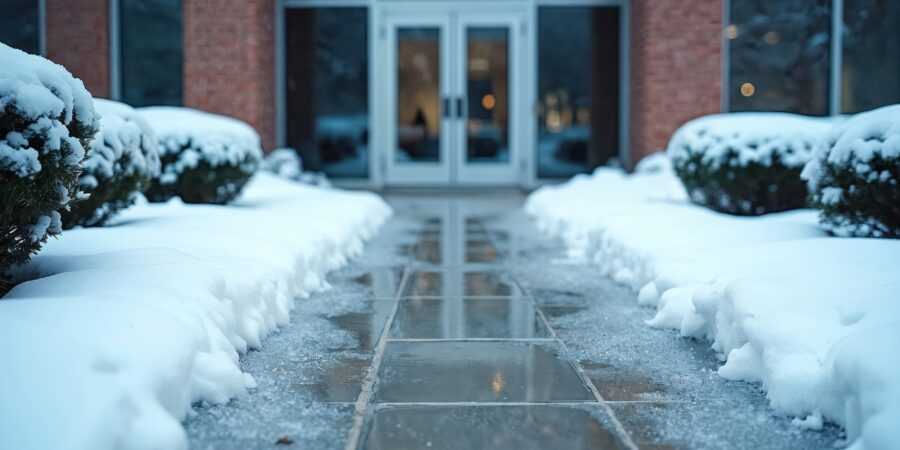
Winter conditions create a perfect storm for increased security risk at residential and commercial properties. Snow, ice, reduced daylight, and colder temperatures can change how spaces are used, creating both seasonal hazards and conditions where existing security gaps become more pronounced. For property managers, these seasonal issues aren’t just operational concerns – they can also introduce liability exposure, particularly when minor system issues contribute to theft, unauthorized access, or safety incidents.
Overhead Doors & Barrier Gates: Preventing Unauthorized Access
In colder months, access points such as garage doors that remain open too long or stairwell doors that do not consistently latch tend to become more attractive to opportunists. Winter conditions can amplify existing access control gaps while also introducing weather-related challenges, increasing the potential for unauthorized entry and opportunistic incidents.
Issues can include:
- Vehicle loop detectors affected by snow buildup or temperature fluctuations
- Photo sensors becoming misaligned or obstructed
- Timing settings that allow overhead doors or barrier gates to remain open longer than necessary
When vehicular access points don’t close promptly, the risk of tailgating and unauthorized entry increases, which can lead to theft of vehicles, bicycles, and storage items from underground parking areas. Addressing these issues helps reduce both incident frequency and potential liability tied to preventable access failures.
CCTV Cameras: Documentation Matters After an Incident
During winter months, lighting conditions change significantly. Precipitation, glare, and shorter daylight hours can all affect camera performance, particularly in garages and exterior areas.
Common winter challenges include:
- Blind spots created by seasonal lighting changes or physical obstructions
- Camera lenses obscured by snow, ice, or grime
- Reduced image clarity that impacts incident review
Clear, properly positioned camera footage plays a critical role after an incident occurs. In winter, this extends beyond security incidents to safety-related events such as slip-and-falls, where poor visibility, glare, or dirty lenses can limit what is captured. Ensuring cameras are clean, correctly aimed, and recording usable footage helps support investigations, resident communication, and follow-up.
Doors & Door Hardware: Small Issues, Real Exposure
Cold temperatures can cause doors and door hardware to behave differently than they do in warmer months. Minor misalignments can be compounded by cold temperatures and changes in air pressure, resulting in doors that close too slowly, or don’t close securely at all.
Winter-related issues often include:
- Automatic door operators that fail to fully secure doors or experience increased strain under winter operating conditions
- Activation issues with wave-to-open door controls, caused by moisture, residue, or winter conditions, leading to unreliable performance
- Changes in sliding door speed, alignment or general performance in colder temperatures
When doors and access points don’t operate as intended, they can create opportunities for unauthorized access and tailgating, not to mention frustration for residents. In some cases, these issues may also raise questions about whether reasonable steps were taken to maintain equipment in proper working order. Regular checks and seasonal adjustments help reduce this exposure.
Why Seasonal Reviews Are a Best Practice
Many winter-related security issues develop gradually. Systems may still appear to be “working” even while liability and risk exposure is increasing over time.
A seasonal review helps:
- Identify small issues before they contribute to incidents
- Reduce exposure related to unauthorized access or theft
- Demonstrate a proactive approach to risk management and due diligence
For property managers, this kind of preventative maintenance supports safer buildings and clearer documentation should an incident occur.
Staying Proactive This Winter
Winter doesn’t have to mean increased risk. With regular reviews and targeted adjustments, many common seasonal issues can be addressed before they become problems. If you’d like help reviewing how winter conditions may be affecting your security systems, or have questions about specific access points or equipment, get in touch with our team today to book a seasonal maintenance visit.


