
Securing Entry Points: Understanding the Importance of Door Hardware
When it comes to securing entry points, the first and most critical line of defense is the door hardware itself. While cylinders and keyways often receive the most attention, the reality is that most door-related break-ins occur through forced entry, not lock manipulation.
That’s why the surrounding hardware plays a vital role in determining how well a door can withstand tampering, physical force, and everyday wear and tear. In this overview, we’ll evaluate some of the most common door hardware types, including traditional knobs, fixed and clutch levers, fixed handles, and protective accessories like latch plate protectors and Spartan Knob Protectors.
Types of Door Hardware: From Best to Worst
Understanding how each of these components contributes to the overall security of a door is essential to making an informed decision for your property or community. Below is a breakdown of various door hardware types, ranked from most secure to least secure.
Fixed Handle: The Most Secure Option
A fixed handle is a separate component from the locking mechanism and is considered one of the most secure forms of door hardware. Because it is not physically connected to the locking mechanism, no amount of force applied to the handle itself will result in unauthorized entry.
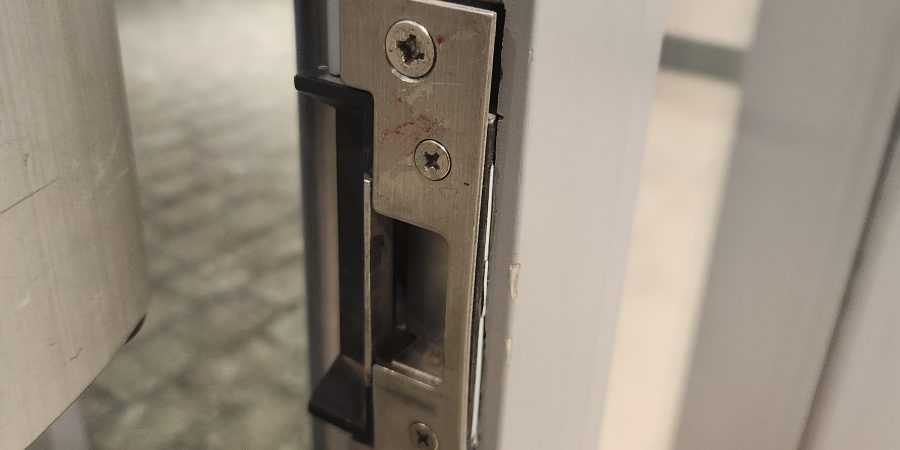
When paired with a magnetic or electric strike system, a fixed handle becomes highly resistant to brute force attacks. There is nothing to twist, pry, or force open, which makes it an excellent choice for high-security areas. It’s ideal for doors that need to withstand tampering or force.
Clutch Lever: Protecting the Lock Mechanism
The clutch lever is designed to spin freely when locked, preventing torque from reaching the internal locking components. Even if the lever is aggressively twisted or pulled, it disengages, protecting the lock from damage or compromise.
However, it’s important to note that while the clutch lever protects the internal lock components, it’s still a lever, which means it can be damaged with enough force. If the lever is broken off or removed, access to the lock mechanism may be possible. As such, while clutch levers offer good protection, they are not as tamper-proof as fixed handles.
Knob: Common but Not Ideal for Security
Door knobs offer limited grip due to their rounded shape, which can make applying torque more difficult. However, knobs are generally less secure than levers or fixed handles. They are also not compliant with the Accessibility for Ontarians with Disabilities Act (AODA), as they require tight grasping and wrist twisting, making them unsuitable for accessibility standards.
While knobs are commonly used in residential settings, they are not ideal for high-security or publicly accessible environments. For doors that need to meet accessibility standards or offer increased security, knobs should generally be avoided.
Rigid Lever: Vulnerable to Force
A rigid lever is directly connected to the latch mechanism, meaning any force applied to the lever is transferred directly to the lock. With enough torque or physical force, such as kicking, wrenching, or prying, the lever can turn and disengage the latch, allowing unauthorized entry.
Rigid levers are considered one of the most vulnerable types of hardware and should be reinforced with additional protective accessories if used. These levers are commonly found on lower-security doors, but they do not offer the same level of resistance to tampering as other options like fixed handles or clutch levers.
Protective Accessories to Enhance Door Security
While hardware type is essential, protective accessories can greatly enhance the security of your doors, making them more resistant to forced entry. Here are some common protective accessories that should be considered for your property.
Spartan Knob Protectors: Shielding Vulnerable Knobs
Spartan Knob Protectors are designed to shield traditional door knobs and, in some cases, modified (cut) levers from tools such as pipe wrenches or channel locks. These protectors form a physical barrier around the knob, making it significantly harder for someone to gain the leverage needed to twist or break the hardware.
Spartan Protectors are especially recommended for doors in public or high-risk locations such as emergency exits, locker rooms, bike rooms, and other areas where increased security is needed. These protectors provide an additional layer of defense, reducing the likelihood of a break-in.
Latch Plate Protectors for Outward-Swinging Doors
Latch Plate Protectors are metal plates installed over the latch area to prevent prying or raking attacks, which are common forced-entry techniques. They reinforce the vulnerable part of the door frame and are a cost-effective way to improve security on outward-swinging doors.
Outward-swinging doors, often found in public buildings or common areas, are particularly vulnerable to forced entry through the latch. Latch plate protectors help to strengthen these doors and make them more resistant to physical tampering.
Interlocking Latch Plate Protectors / Latch Guards for Inward-Swinging Doors
For inward-swinging doors, the typical latch plate protector won’t work as effectively due to the way the door opens. That’s where interlocking latch plate protectors or latch guards come in.
This system uses two interlocking plates—one on the door and one on the frame—that connect when the door is closed. This prevents tools or thin objects from being inserted between the door and the frame to pry or manipulate the latch.
While slightly more expensive than standard latch plate protectors due to added materials and installation complexity, interlocking latch guards are essential for inward-swinging doors. Without them, the latch area is typically the first point to fail during a break-in attempt. These guards provide significant reinforcement and make forced entry much more difficult.
Understanding Forced Entry Risks
Most break-ins are crimes of opportunity or convenience, not elaborate, premeditated heists. This is particularly true in areas like condominium exit doors, locker rooms, and bicycle storage areas, where the value of items is often limited. Without the proper security measures, these doors are prime targets for quick break-ins.
Investing in quality door hardware and protective accessories will make your property more resilient to forced entry attempts, ensuring that your residents’ property and safety are safeguarded.
Conclusion: Strengthening Security Starts with the Right Hardware
When it comes to securing doors, the surrounding hardware plays a critical role in preventing forced entry and ensuring long-term durability. By understanding the different types of hardware, from the most secure fixed handles to more vulnerable rigid levers, and utilizing protective accessories like Spartan Knob Protectors and latch plate protectors, you can significantly enhance the security of your property.
Upgrading to stronger, more reliable door hardware will provide peace of mind to your residents and help protect valuable assets from opportunistic break-ins. If you’re unsure about which upgrades to make or how to best reinforce your building’s doors, consider consulting with a security professional to ensure your hardware meets your property’s unique needs.


